 Skip to content


Andrographis / Kalmegh (Andrographis paniculata)
Materia Medica
Family: Acanthaceae
Botanical name: Andrographis paniculata (Burm.f.) Nees
Common names: Andrographis, Kalmegh, King of Bitters, Green Chiretta, Bhunimba
Parts used: Aerial parts (herb), leaves
Growth habit: Annual herb
Primary traditions: Ayurvedic, Traditional Chinese, and Southeast Asian herbalism
Actions & Energetics
Ayurvedic materia medica describes the herb as bitter, light, dry, and heating, with actions of reducing Kapha and Pitta. Traditional records note it as a bitter digestive tonic, febrifuge, and liver support. The intense bitterness is a defining characteristic.
Botanical Description
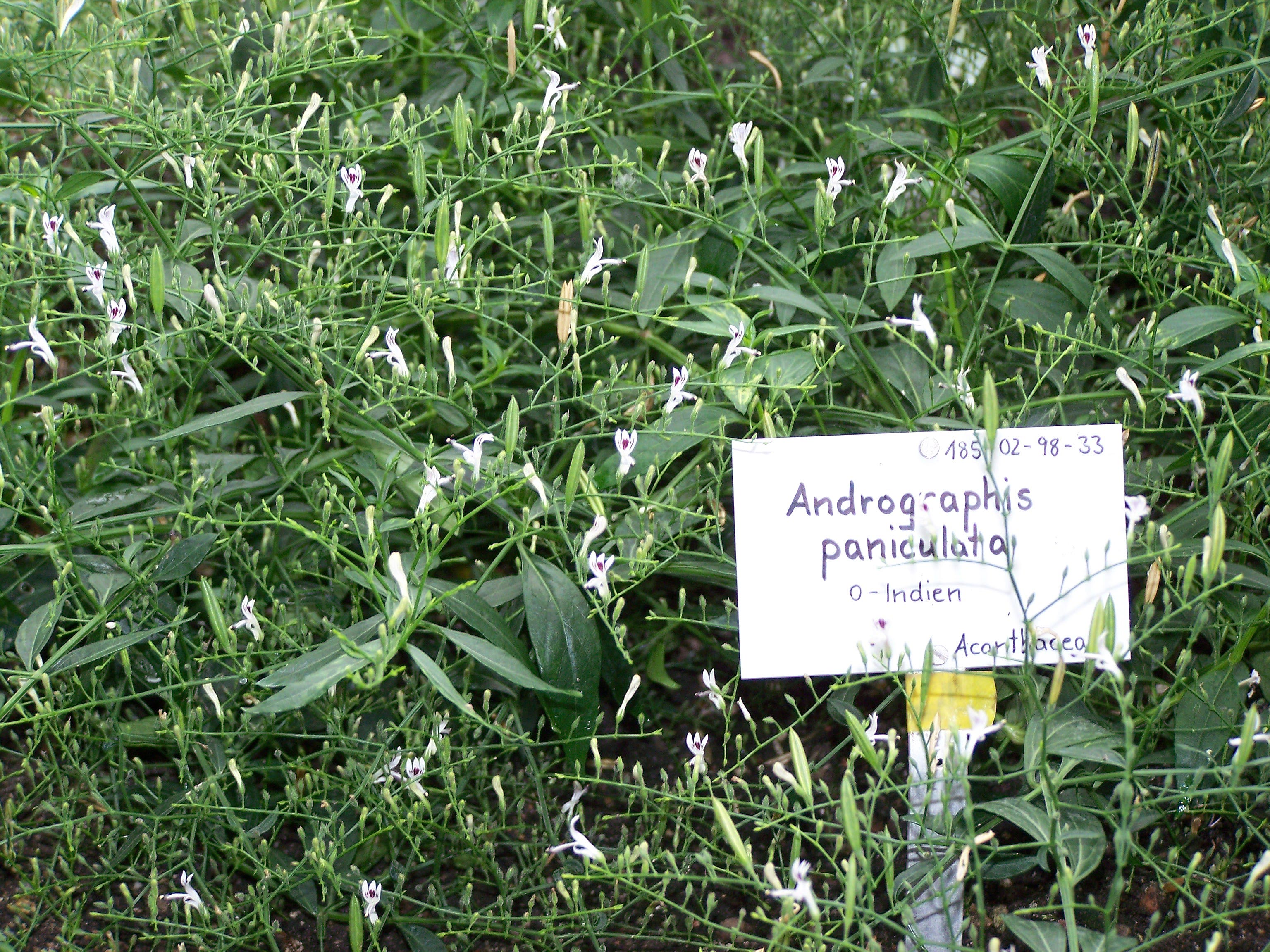
Andrographis paniculata is an erect annual herb with opposite lanceolate leaves and small white to pinkish flowers in elongated racemes or panicles. The whole plant is extremely bitter. It is native to India and Sri Lanka and widely cultivated in tropical Asia.

Traditional Indications
Ayurvedic texts record the herb for fever (especially intermittent), digestive weakness, liver conditions, and as a bitter tonic. Chinese and Southeast Asian traditions use it for colds, fever, and respiratory infections. The plant is also recorded for snakebite and insect stings in some regional traditions. It is a component of many classical formulas.
Preparations & Dosage
Herb Decoction or Powder
Traditional Ayurvedic records commonly use the dried herb or powder in the range of 1–3 grams daily, often divided. Higher amounts appear in some regional formulas for fever.
Leaf Juice or Infusion
Fresh or dried leaves are prepared as a tea or decoction for digestive and febrile conditions.
Constituents
The plant contains diterpene lactones, principally andrographolide and related compounds. These are responsible for the intense bitterness and many of the studied effects. Flavonoids and other secondary metabolites are also present.
Modern Research
Human studies have examined the herb and andrographolide extracts for upper respiratory infections and immune markers. Results are mixed but supportive for short-term use in colds. Laboratory work has explored anti-inflammatory and antimicrobial effects.
Adverse Effects
Ordinary traditional doses are generally well-tolerated. The intense bitterness can cause mild digestive upset in some individuals. High-dose concentrated extracts have been associated with more frequent side effects in modern trials.
Interactions & Contraindications
No major clinically established drug interactions are recorded for ordinary traditional doses. The herb is strongly bitter and may affect digestive secretions.
Pregnancy & Breastfeeding
Traditional sources do not list strong restrictions for ordinary doses of the herb, but modern data on concentrated extracts are limited. Ordinary food-level or low traditional doses are the historical pattern.
Habitat & Cultivation
- Native range: India and Sri Lanka
- Habitat: Tropical plains, cultivated fields
- Cultivation: Widely grown in India, China, and Southeast Asia for the herb
Harvesting & Drying
The aerial parts are harvested when the plant is in flower or before seed set. The herb is dried for decoctions, powders, and extracts. Fresh leaf juice is also used in some traditions.
History, Folklore & Spiritual Use
Known as the “King of Bitters,” Kalmegh has been used for centuries in Ayurveda and other Asian systems as a bitter digestive and febrifuge. The Sanskrit name Kalmegh means “black cloud.” It appears in classical Indian pharmacopoeias and is still a common household remedy for fever and digestion in parts of South and Southeast Asia.
Materia Medica Summary
Andrographis / Kalmegh (Andrographis paniculata) is a classical bitter herb recorded in Ayurvedic and other Asian traditions for fever, digestive weakness, and as a tonic. Typical traditional doses of the dried herb are 1–3 g. The principal bitter compounds are andrographolides. The plant is widely cultivated for medicinal use.